 English
 日本語
日本語 العربية
 French
 Deutsch
 Español
 Portuguese
 Русский
 Bahasa Indonesia
 中文
中文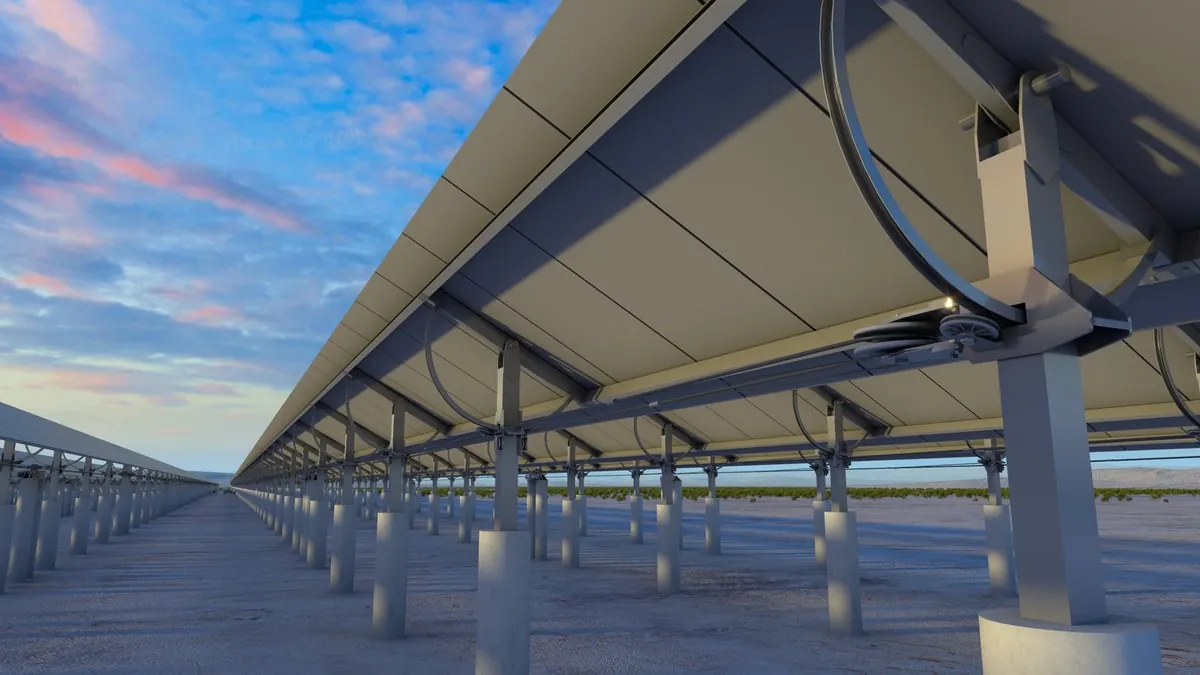
This article carries out technical analysis on the basis of national policies, standards and codes, public data and the current state of the industry. It is intended purely as objective discussion, with no targeted direction.
In the same field of hardcore technology, a motorcycle team, by thoroughly mastering mechanical principles and persistent effort, achieved a comeback on the international stage and broke years of monopoly with real performance. This fully proves that genuine technical strength never relies on titles and packaging, but on the ability to solve core problems.
By contrast, the PV flexible bracket industry, after more than a decade of development, has fallen into technological stagnation, slow iteration and rampant disorder — a sharp contrast with that kind of hardcore breakthrough, which leaves one embarrassed, disheartened and somewhat helpless.
Many participants in the industry are not without good intentions, yet they have long been bound by old paths and entrenched structures. From its early development, the flexible bracket formed the operating approach of "low tilt to control wind load and keep the foundation safe", which over time became the default convention of many companies. It is not subjective ill intent, but rather that many companies lack capability in core designs such as high-tilt wind-load control and structural stability optimization; facing truly difficult technical problems, they can only follow the compromise scheme that sacrifices power generation.
Even with this compromise, safety problems remain prominent. Under strong winds, hidden dangers such as module swaying and loose connections occur frequently, ultimately falling into the double dilemma of "neither safety nor revenue secured". What is more regrettable is that high-performance flexible bracket technology capable of achieving the normal optimal tilt angle was in fact mature and verified many years ago, yet because of the industry's entrenched structures, invisible barriers and a complicated real-world environment, it has never been promoted — mature technology long buried. This is a sorrow for the industry and a hidden worry for national energy assets.
What is truly ironic is that many companies in the flexible bracket field, when responding to the industry's shortcomings, did not choose genuine technical breakthroughs, but devoted great energy to qualification certificates, medals and titles, rankings and formalistic reports. Wrapped in layers of "halos", they may look impressive, but this precisely conceals the real problems: insufficient structural design capability, weak core technology and a lack of innovation drive.
Once the work reaches the site, the old problem of low tilt remains unchanged, structural swaying persists, and the hidden loss of revenue continues. This is not an occasional failure of ability, but the inevitable result of a morbid culture that values form over substance.
From the perspective of national energy assets, the loss caused by this model is staggering. For a 100 MW flexible bracket plant, the loss of whole-life-cycle revenue over 25 years caused by low-tilt design alone can reach tens of millions of yuan, and in high-irradiation regions such as the southwest and southeast it can even exceed 100 million yuan. Accumulated nationwide, the waste of national energy revenue is beyond measure. Module manufacturers spend huge sums to improve efficiency by a tiny margin, only to have it easily offset by wrong flexible bracket design — a great waste of national resources and social capital.
To stop this continuous loss and safeguard national energy assets, issuing a standard for the optimal tilt angle of flexible brackets as soon as possible is urgent and imperative.
Here we solemnly call for:
The national standardization authorities and relevant competent departments should study and formulate mandatory industry and national standards for the optimal tilt angle of flexible bracket modules as soon as possible, plugging the revenue loophole, breaking the industry's inertia and curbing formalistic disorder at the institutional level.
Only by clarifying tilt specifications at the national level can companies escape the old road of low-tilt compromise, and can truly high-performance, stable and reliable flexible bracket technology be promoted and implemented. At the same time, we hope the industry will gradually abandon the impetuous culture of "piling up medals and packaging qualifications to cover insufficient capability", and return its energy to the essence of technology, to structural design, and to innovation and creation.
We look forward to the early end of this morbid and distorted industry model, so that technology is no longer buried, innovation is truly implemented, and the PV industry moves towards a high-quality, healthy and sustainable future.